


-
About
-
Product
-
Solution
-
Support
-
News
-
Join
About
Product
Solution
Support
News
Join

 PubDate:2026-08-10
 ViewNum:236
From August 7 to 10, the 2026 Academic Conference of the Underwater Acoustics Branch, Acoustical Society of China was successfully held at Harbin Engineering University. Hosted by the Underwater Acoustics Branch, Acoustical Society of China, the conference was undertaken by the National Key Laboratory of Underwater Acoustic Technology and co‑organized by the College of Underwater Acoustic Engineering, Harbin Engineering University.
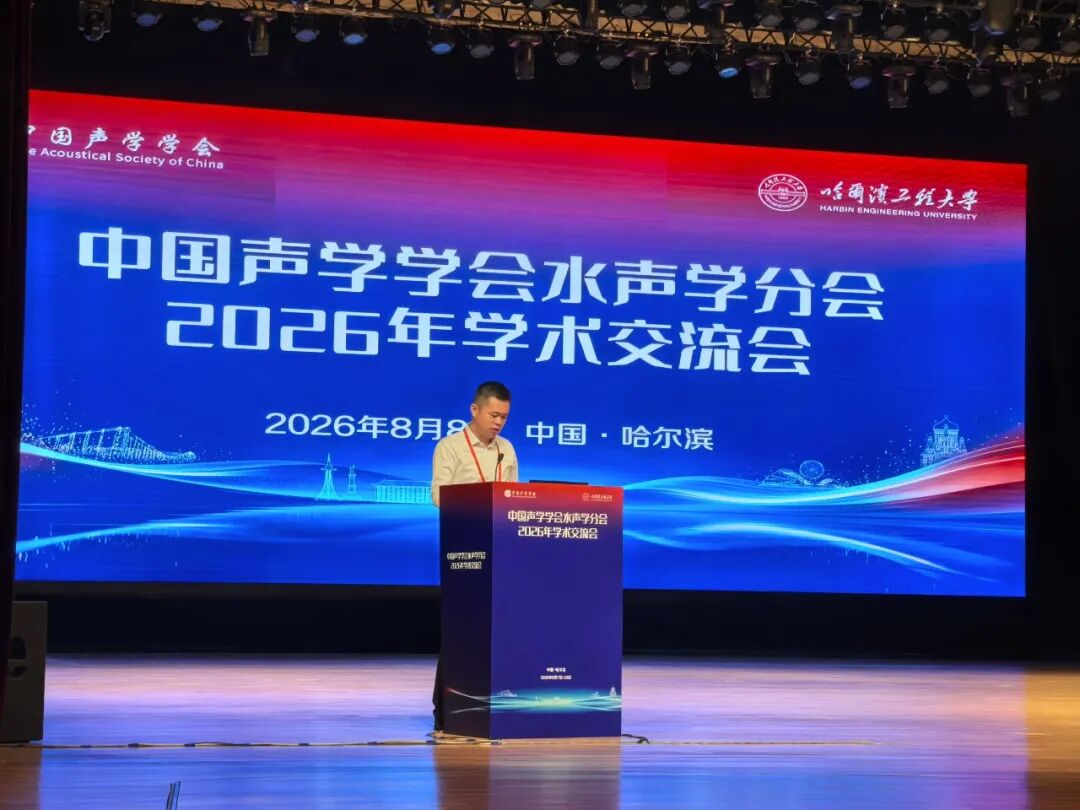
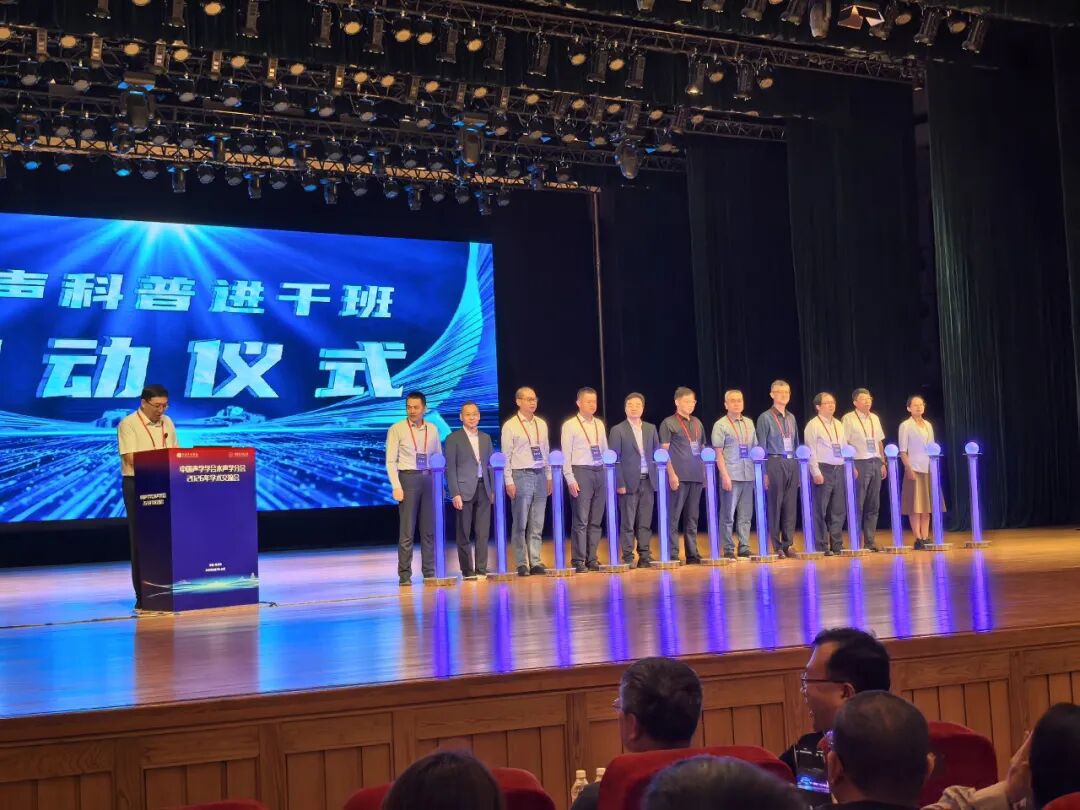
Academicians and professors including Academician Da Lianglong from Naval Submarine Academy, Academician Wang Haibin from the Institute of Acoustics, Chinese Academy of Sciences, Academician Yang Kunde from Northwestern Polytechnical University, Professor Yang Yixin from Nanjing University of Science and Technology, and Professor Yin Jingwei from Harbin Engineering University attended the opening ceremony and delivered keynote speeches.
Shallow-sea Technology was invited to participate in the exhibition. It brought its full lineup of self‑developed Conductivity‑Temperature‑Depth (CTD) sensors to the concurrent equipment achievement exhibition of the conference. Relying on high‑precision hardware solutions for marine environmental observation, the company had in‑depth exchanges with experts in the underwater‑acoustics field on acoustic‑field environmental observation technologies, and bridged the technical chain between marine hydrological observation and underwater‑acoustic propagation research.
Grand Gathering Explores New Integrated Directions for Underwater Acoustics & Marine Industry
As the core supporting technology for underwater detection, communication, navigation and ocean observation, acoustics serves as a crucial pillar underpinning China’s maritime power strategy and the major national requirements of deep-sea access, deep-sea exploration and deep-sea exploitation. Currently, driven by the vigorous development of cutting-edge fields including unmanned underwater vehicle swarms, intelligent sonar systems, trans-medium communication, polar scientific investigation and marine big data, the research paradigm of underwater acoustics is undergoing profound transformation: it is rapidly evolving from traditional independent physical modeling into a new phase featuring interdisciplinary integration of physics, signal processing, equipment engineering and intelligent technology.
Centering on the independent development trend of underwater acoustic technologies, this academic conference on underwater acoustics consists of four segments: keynote invited speeches, thematic parallel forums, industry-university-research matchmaking sessions, and equipment achievement exhibitions.
The distribution of seawater temperature, salinity and depth constitutes the fundamental factors determining marine sound velocity profiles and underwater acoustic propagation loss. High-precision CTD observational data serves as indispensable fundamental support for underwater acoustic simulation modeling, sonar detection calibration and optimization of underwater communication algorithms. The in-depth integration of hydrological observation and underwater acoustic research has become a major development trend in the field of deep-sea exploration nowadays.
At the exhibition venue, numerous academicians specializing in underwater acoustics, university professors and leaders of research teams visited the booth of Qianhai Technology. They exchanged views on application scenarios of domestic CTD devices, including fixed-point observation at underwater acoustic test sites, long-term deployment of mooring arrays, and profiling detection carried by autonomous underwater vehicles (AUVs). Participants shared ideas to tackle practical engineering challenges such as long-duration resident observation in deep seas, low-power synchronous sampling, and anti-fouling stable measurement in extreme marine environments.
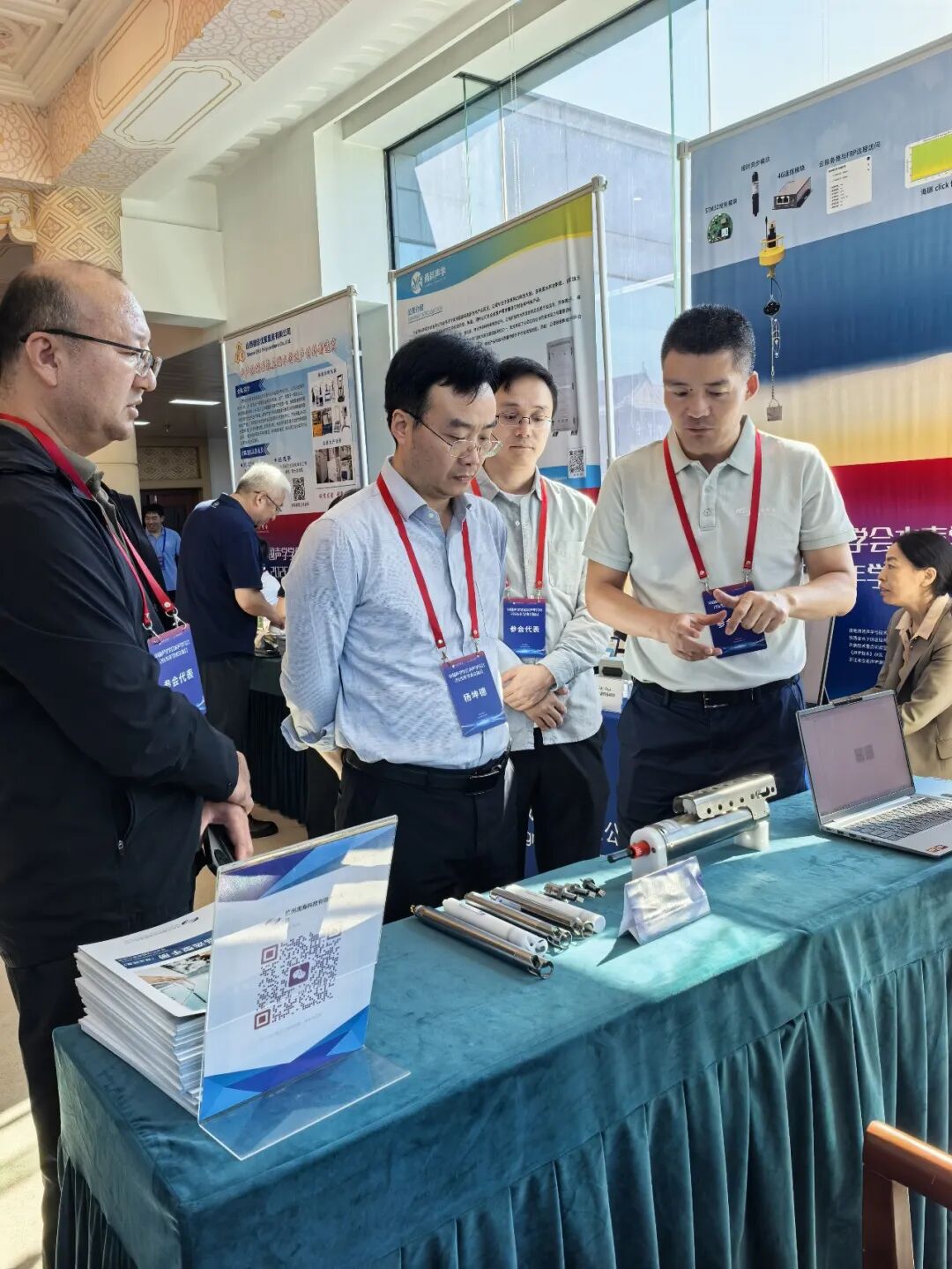
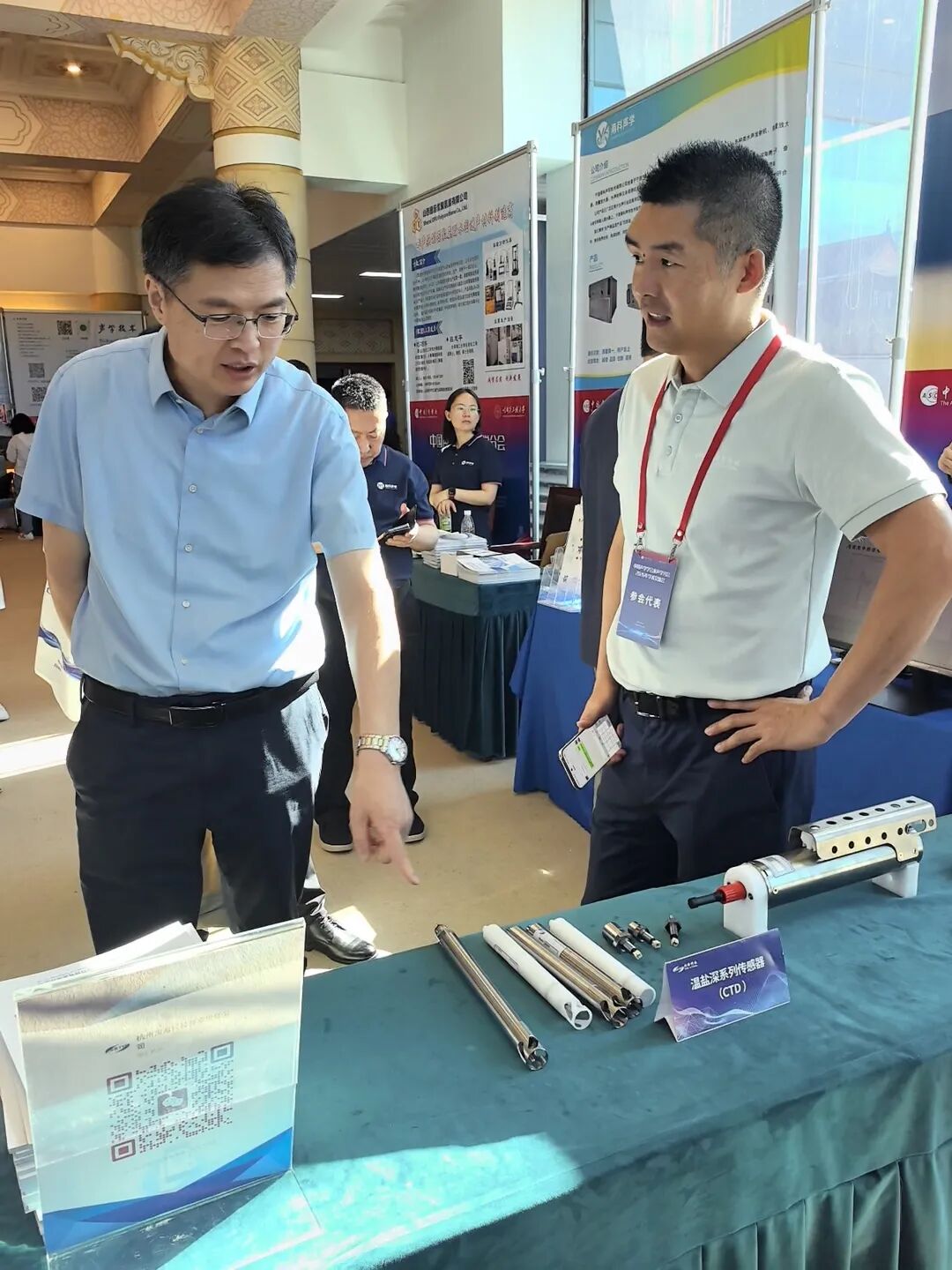
High-performance Exhibits: Full-range CTD Products Adapt to Diverse Underwater Acoustic Scenarios
At this exhibition, Shallow-sea Technology presents its full lineup of self-developed CTD product matrices, covering integrated hydrological detection equipment including self-contained scientific research CTDs, miniature OEM temperature-depth sensors, and mooring-mounted deep-sea CTDs. The products fully adapt to the needs of diverse scenarios such as scientific research in underwater acoustic laboratories, offshore underwater acoustic experiments, and regular marine sound field monitoring.
Adopting self-developed circuit architecture, anti-corrosion titanium alloy pressure hulls and biofouling-resistant sensing structures, the full range of Qianhai CTD products achieves domestic independent controllability, satisfying the demand for homegrown equipment in large-scale deployment and long-term sea trials for underwater acoustic research projects.
Forging Ahead Deep into the Blue, Empowering the Maritime Power Strategy
The successful conclusion of this underwater acoustics academic conference in Harbin marks a vital opportunity for Qianhai Technology to connect with the top academic community in the underwater acoustics field, as well as a key step for the company’s strategic layout in the integrated observation track of underwater acoustics and marine hydrology.
Having devoted years to the marine observation sector, Qianhai Technology has long specialized in the R&D and manufacturing of CTD instruments, water quality monitoring equipment, marine meteorological buoy platforms and other products. Committed to developing domestically manufactured precision marine sensors, the company delivers stable and reliable hardware support for marine acoustics, oceanographic research, maritime defense and marine ecological monitoring.
In the future, Qianhai Technology will further strengthen industry-university-research collaborative innovation with national universities and research institutions in the field of underwater acoustics. The company will continuously upgrade CTD observation equipment dedicated to underwater acoustic scenarios. With solid domestic marine sensing capabilities, Qianhai Technology will support the high-level self-reliance and self-improvement of China’s underwater acoustic technology, safeguard deep-sea marine resources, and empower the construction of a maritime power.
 Next:Smart‑Connected Low‑Altitude Economy, Safeguarded by Meteorology|Shallow-sea Technology Attends Binjiang District AI + Low‑Altitude Economy Themed Salon with Low‑Altitude Meteorological Detection Equipment




 WeChat
 T1-11F, Herui Science and Technology Park, Binjiang District, Hangzhou City, Zhejiang Province


